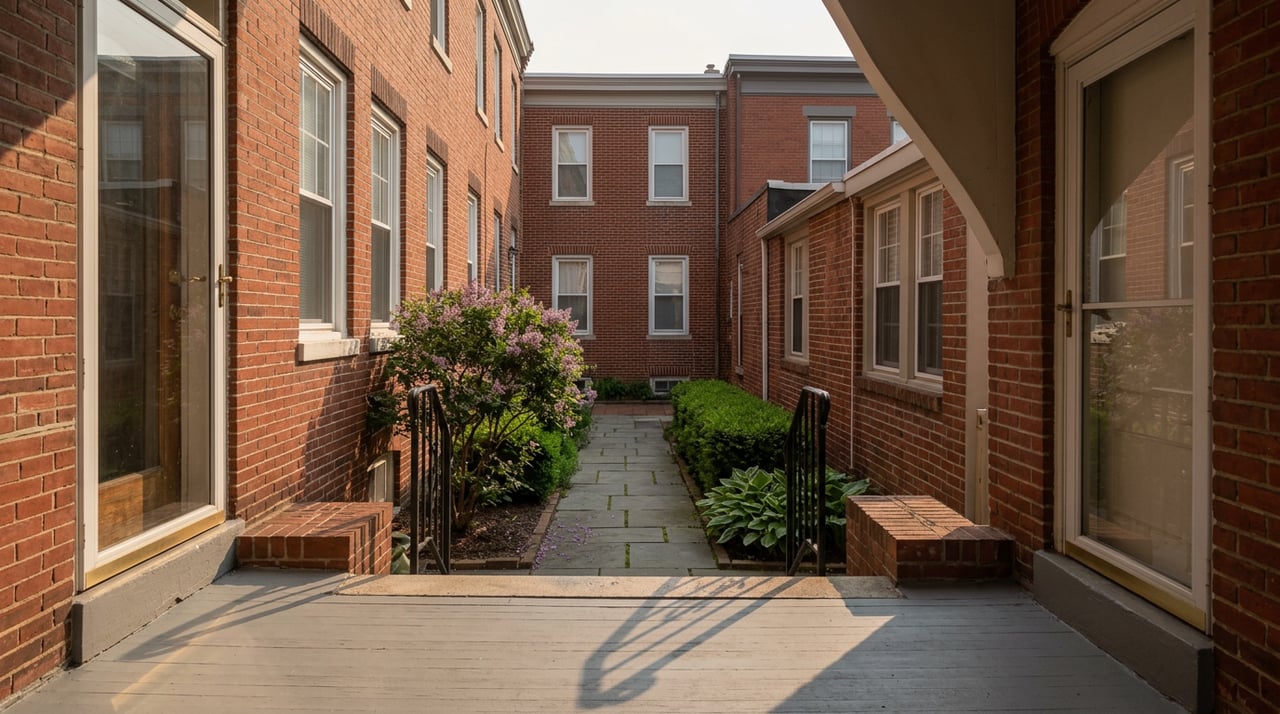
"People are realizing co-ops are good value, and so there's been a return to co-ops," Brown Harris Stevens agent Lisa Lippman told The Real Deal in July, describing a Manhattan market where co-op prices climbed faster than condo prices for the second quarter of 2026. It's a fair read of the headline numbers. It's also only half the story if you're the one signing a purchase agreement this fall.
The other half is happening inside board meeting minutes, not in the median-price tables everyone quotes. Two things are converging on Manhattan's co-op stock right now, and neither shows up in a per-square-foot comparison. One is a climate law finally sending real bills. The other is a brand-new tax whose math treats co-ops and condos differently for reasons that have nothing to do with what a buyer actually pays. Understanding both changes what that famous co-op discount is worth to you specifically, not to the market in the abstract.
What the Discount Is Actually Buying You
Roughly 70 percent of Manhattan's apartment stock is co-op, and the reason it trades cheaper than condos isn't mysterious. A co-op buyer receives shares in a corporation plus a proprietary lease, not a deed. That structure comes with a board that can reject you, restrict your ability to sublet, and demand deep financial documentation before you ever get a vote. A condo buyer gets a deed and, in most buildings, no board veto at all. Buyers pay for that flexibility, and sellers of co-op shares accept less for the friction.
That discount has held in the 20 to 40 percent per-square-foot range across multiple 2026 market reports, and the pattern showed up again in the second quarter of 2026: Manhattan's median co-op sale price hit $895,000, up 8.5 percent year over year, according to a Real Deal analysis of recorded home sales, while the median condo price crept up just 2.9 percent over the same period. On paper, co-ops look like the value play of the year.
But a discount tied to building age and board friction is only stable if the age and friction stay constant. In 2026, they didn't.
The Monthly Numbers Tell a Different Story
Start with what actually lands in your mailbox every month, because the sale price gap and the carrying cost trend aren't telling the same story.
| Q2 2026 (Manhattan average) | Year-over-year change | |
|---|---|---|
| Co-op maintenance | $3,077/month | +10.2% |
| Co-op maintenance, per square foot | $2.83/sq ft | +16% |
| Condo common charges + real estate taxes | $4,466/month ($3.37/sq ft) | not disclosed in this report |
Those figures come from Jonathan Miller of Miller Samuel, reported by Brick Underground's second-quarter market coverage. Condos still cost more per month in absolute dollars. But the co-op side of the ledger is the one moving fast, up double digits in dollar terms and even faster on a per-square-foot basis, and that gap is exactly where Local Law 97 lives.
The Buildings Behind the Discount Are the Ones Getting the Bill
New York City's Local Law 97 caps carbon emissions for buildings over 25,000 gross square feet, with fines of $268 per metric ton over the limit. The law's first real compliance and verification deadline landed May 1, 2026, and the city has begun assessing fines against buildings that exceeded their cap.
Here's the overlap that matters for a co-op buyer specifically. The buildings that generate Manhattan's steepest co-op discounts tend to be exactly the buildings LL97 hits hardest: prewar, low-rise, built with steam heating and single-pane windows that were never designed with an emissions cap in mind. Boards in buildings that come in over their limit are left with a narrow set of options: raise maintenance well beyond a typical annual increase, pass a one-time assessment to cover an engineering study or retrofit, or borrow against the building through an underlying mortgage refinance, which carries its own cost given where rates sit.
The dollar figures at stake aren't abstract. Outside Manhattan, board leadership at Glen Oaks in Queens, New York City's largest garden-apartment co-op complex, told the New York Post that its 96 boilers would cost $24.5 million to replace, against roughly $1.1 million a year in fines if nothing changes. Bay Terrace, a 200-unit co-op also named in a lawsuit against the city over LL97, estimated heat pump installation alone at $3 million, enough to trigger a 30 percent jump in monthly maintenance for shareholders. Manhattan's prewar co-op stock carries the same physical plant problems. The bill just hasn't landed on every building yet.
Read the Board Minutes Before You Read the Price Tag
This is the practical test worth running before you fall in love with a discounted co-op. Ask for recent board minutes and look for specific language: "Article 320 plan," "decarbonization study," "engineer scope," or "carbon assessment." If those phrases appear and the board hasn't voted on funding, you're buying an open question, not a known number. If the board has already approved a funding path, at least you know what you're signing up for.
New York isn't a strict caveat-emptor state on this point. A seller can't dodge a direct question about a pending assessment or a known compliance violation, and a buyer's attorney will find LL97 exposure in the lien search regardless. The buildings quietly ahead of the curve are the ones tracking New York State's newly expanded J-51 tax abatement, which covers boiler, facade, and climate-friendly upgrades. A City Council member introduced a bill in August to reauthorize and codify the expanded program locally, with a Council hearing expected this September and passage expected this fall. A board already positioning for that kind of offset is a different risk profile than one that hasn't started the conversation.
The Pied-à-Terre Tax Adds a Wrinkle Only Co-op Math Explains
Layered on top of LL97 is New York City's new pied-à-terre tax, which took effect July 1, 2026, and applies an annual surcharge to non-primary-residence condos and co-ops valued above $1 million by the Department of Finance. For the first two tax years, rates run from 4 to 6.5 percent of assessed value depending on the bracket.
Here's the part that doesn't show up in most explanations of the tax. The Department of Finance values co-op shares using an income-capitalization method built for rental buildings, and that method can produce assessed values running near 10 percent of true market value. A co-op unit that a buyer paid $4 million for might carry a DOF assessed value closer to $350,000, well under the tax's $1 million threshold, while a condo purchased for the same price is typically assessed much closer to market and lands squarely inside the surcharge. Two owners paying the same price for the same square footage can face very different annual tax exposure, purely because of how their apartment is legally structured.
That asymmetry matters more if you're buying as an investment or a second home than if you're moving in as your primary residence, since primary residences are exempt regardless of property type. The tax's rollout itself isn't fully settled either. A group of homeowners sued the city in early August, arguing the Department of Finance improperly published a list of roughly 960,000 properties and sent warning notices to about 17,000 owners without adequately verifying who actually owed the surcharge. A Staten Island judge issued a temporary restraining order on August 10, the city appealed within hours and won a stay, and the case returned to court on August 31. As of early September, the surcharge remains in effect while that litigation plays out, and the exemption filing deadline still stands at September 18. Anyone weighing a non-primary-residence purchase this fall should treat that deadline and the underlying tax exposure as live, not settled.
What This Means If You're Weighing a Co-op This Fall
None of this erases the co-op discount. It's real, and for a buyer planning a long owner-occupied hold, it still represents genuine value, particularly with less competition for co-op inventory than for scarce new-development condos right now. But the discount isn't uniform across the co-op stock anymore, and pricing your offer purely off comparable sales without checking the building's LL97 status is pricing off half the information.
A reasonable rule of thumb: build in a meaningful buffer above whatever a board will technically approve you for, rather than stretching to the maximum. Buyers who bought to the ceiling in the past two years are the ones now getting squeezed when a property tax reassessment and a newly scheduled LL97 retrofit land in the same year. Headroom isn't just comfort. In a building facing capital assessments, it's the difference between weathering the next few years and being forced to sell into them.
A Few Questions Worth Asking Directly
Does Local Law 97 apply to condos too, or just co-ops? It applies to any covered building over 25,000 square feet regardless of ownership structure, including condo buildings governed by a single board of managers. Co-ops are simply overrepresented among the older, low-rise buildings the law hits hardest.
Is the pied-à-terre tax still being enforced right now? As of early September 2026, yes. The city's appeal stayed the court's temporary restraining order, and the Department of Finance has continued implementation while the underlying lawsuit proceeds. The September 18 exemption filing deadline has not been vacated.
Can I ask a co-op board directly about LL97 costs before I make an offer? Yes, and you should. Request board meeting minutes from the past year along with the building's most recent LL97 compliance filing status. A seller's broker cannot refuse a direct question about a known assessment or violation.
Comparing a co-op and a condo in Manhattan right now takes more than a price-per-square-foot spreadsheet. If you want someone who reads board minutes the way other agents read comps, John O'Kane has spent decades walking Queens and New York City buyers through exactly this kind of due diligence. Call John for a consultation before you sign anything.