Thinking about buying in Brooklyn and torn between a small multi-family building and a mixed-use property? That choice can shape your day-to-day management, risk, financing strategy, and long-term returns more than many investors expect. If you want a clearer way to compare these two asset types in Brooklyn, this guide will walk you through demand, vacancy, lease structure, taxes, and underwriting so you can evaluate deals with more confidence. Let’s dive in.
Brooklyn Market Basics
Brooklyn is a large and varied housing market, with about 1,111,000 housing units in 2023. It also had roughly 348,800 units with three or more bedrooms, the largest count of any borough in New York City. That matters because many smaller residential buildings in Brooklyn serve household-sized demand, not just studio or one-bedroom renters.
Residential demand also remains tight. Brooklyn’s net rental vacancy rate was 1.27% in 2023, which was below the citywide rate of 1.41%. For investors, that supports the case that well-located residential units often benefit from a deep renter pool.
What Counts as Small Multi-Family
In practical terms, a small multi-family investment usually means a residential income property with a low unit count. In New York City, property tax class can vary based on the number of units, and that matters because up to three units may fall into Class 1 in some cases, while primarily residential properties with four or more units are generally Class 2.
These buildings are usually underwritten first as residential assets. Your focus is often the apartment rent roll, building condition, turnover history, insurance, repairs, and property taxes. Compared with mixed-use property, the income story is usually simpler.
What Counts as Mixed-Use in Brooklyn
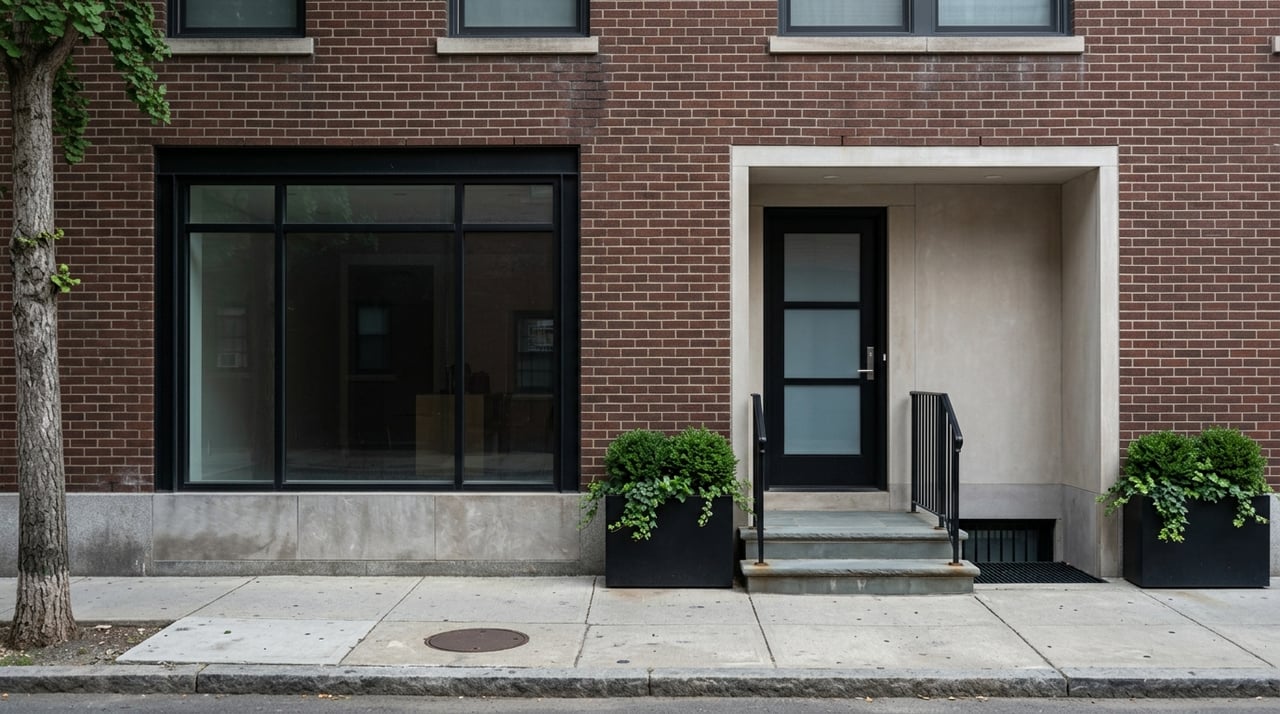
New York City defines mixed-use as a building with two or more uses, such as residential plus commercial, mercantile, business, community-facility, or manufacturing space. In Brooklyn, that often means apartments above and a storefront or office on the ground floor.
From an investment standpoint, mixed-use adds a second business model to the same building. You are not only evaluating residential demand, but also the strength of the commercial corridor, the lease terms for the storefront, and the time it may take to replace a commercial tenant if the space goes dark.
Small Multi-Family: Why Investors Like It
Small multi-family often appeals to buyers who want a more straightforward income property. The tenant base is mainly households and long-term renters, and Brooklyn’s larger share of bigger apartments supports that demand pattern.
There is also less lease-structure complexity in many cases. You are usually reviewing apartment leases rather than balancing residential leases with a commercial lease abstract that may include pass-throughs, maintenance obligations, and custom terms.
Another practical point is that many low-unit buildings in Brooklyn are market-rate unless a separate program applies. Rent stabilization in New York City generally starts at six units and applies to certain older or tax-benefited buildings. Where stabilization does apply, tenants have the right to a one- or two-year renewal lease, and renewal notices must be sent 150 to 90 days before lease expiration.
Mixed-Use: Why Investors Consider It
Mixed-use can be attractive because it offers income diversification. Instead of relying only on apartment rent, you may also collect rent from a storefront or office tenant on the ground floor.
That commercial component can be valuable when the corridor is healthy and the lease is well structured. Retail lease terms are often longer than apartment leases. CBRE reported an average retail lease term of 95 months for spaces between 1,000 and 4,999 square feet through the third quarter of 2024.
Mixed-use also connects you to Brooklyn’s local small-business economy. New York City’s storefront analysis found that 84% of small-business storefronts operating at the start of 2020 were either still operating as the same business or had been replaced by another small business by 2026. That suggests many mixed-use storefronts are tied to local and entrepreneurial demand rather than larger institutional tenants.
Vacancy Risk: Residential vs Storefront
This is one of the biggest differences between the two property types. Residential vacancy in Brooklyn is tight by city standards, with the borough at 1.27% in 2023. That does not remove risk, but it does suggest that apartment demand is generally broad.
Storefront vacancy is a different story. New York City’s storefront vacancy rate was 11.0% as of April 15, 2026, and North Brooklyn was identified among the city’s highest-vacancy areas. The Comptroller also found elevated long-term storefront vacancy in Brooklyn areas including Williamsburg, East Williamsburg, Crown Heights, Starrett City, Sunset Park, and East Flatbush.
For you as an investor, that means mixed-use risk is often far more block-specific than apartment risk. A building can have fully occupied apartments and still struggle on the ground floor if the storefront sits on a weak corridor or in a pocket with persistent vacancy.
Lease Structure Changes the Math
When you compare Brooklyn small multi-family vs mixed-use investments, lease structure is where the math can really separate. Small multi-family analysis usually starts with residential rent, turnover assumptions, and operating costs.
Mixed-use requires a closer look at the storefront lease abstract. CBRE defines net leases as leases where the tenant pays some or all taxes, insurance, and maintenance, while gross leases typically include real property taxes, building insurance, and major maintenance in the rent. That means two mixed-use buildings with similar gross rent can produce very different net operating income depending on how the commercial lease allocates expenses.
You also may need to account for tenant improvements and lease-up time on the commercial side. If a storefront goes vacant, the downtime and replacement cost can be much different from turning over an apartment.
Property Taxes and Classification Matter
In New York City, tax class affects how property is assessed and how investors should underwrite value. Class 1 includes up to three units and some small store or office combinations. Class 2 is primarily residential property with four or more units. Class 4 covers commercial and industrial property.
For tax year 2026, New York City published property tax rates of 19.843% for Class 1, 12.439% for Class 2, and 10.848% for Class 4. The rate alone does not tell the whole story, because assessed value methodology and transition rules also matter.
Class 2 properties are valued as income-producing assets based on income and expenses, which makes verified rent rolls and operating statements especially important. Smaller Class 1 and certain small Class 2 properties also have assessment-increase caps, while some larger Class 2 and Class 4 properties use transitional assessed values phased in over five years. On the same Brooklyn block, two buildings can look similar from the sidewalk but underwrite very differently because of tax class.
Which Asset Fits Your Investment Style?
A small multi-family property may fit you better if you want simpler operations, a more predictable residential tenant base, and fewer moving parts in underwriting. This can be especially appealing if your priority is stable apartment income and easier day-to-day management.
A mixed-use building may fit you better if you are comfortable analyzing commercial leases and you believe in a specific retail corridor. It can offer diversification and potentially stronger income, but only if the storefront risk is priced correctly and the lease terms support the return.
In Brooklyn, that choice often comes down to how much corridor-specific risk you want to accept. Residential demand may be broad, but storefront performance can vary sharply from one stretch of a neighborhood to the next.
A Simple Brooklyn Comparison
| Factor | Small Multi-Family | Mixed-Use |
|---|---|---|
| Main income source | Residential apartments | Apartments plus commercial space |
| Tenant profile | Households and long-term renters | Households plus small-business tenants |
| Vacancy pattern | Generally supported by tight borough rental vacancy | More uneven and corridor-specific |
| Lease complexity | Usually simpler | Often more complex |
| Key documents | Rent roll, expenses, building condition | Rent roll, lease abstract, expenses, commercial terms |
| Major risk focus | Residential turnover and repairs | Storefront vacancy, lease-up time, expense allocation |
1031 Exchange Considerations
If you are selling one investment property and considering another, both small multi-family and mixed-use buildings can work in a 1031 exchange if they are held for investment or business use. IRS guidance generally treats real estate exchanged for real estate as like-kind.
The important limits still apply. Property held primarily for sale does not qualify, and any cash or non-like-kind property received can trigger recognized gain to that extent. If a 1031 exchange is part of your strategy, deal structure and timing matter early, not after the contract is signed.
Final Takeaway for Brooklyn Investors
There is no one-size-fits-all winner in the small multi-family vs mixed-use debate in Brooklyn. Small multi-family usually offers simpler underwriting and benefits from very tight residential vacancy, while mixed-use can create added income potential but brings more lease complexity and more location-sensitive storefront risk.
The smartest move is to evaluate each building in context. In Brooklyn, the details that matter most are often the unit mix, the exact block, the storefront history, the lease structure, and the tax class. If you want experienced guidance on valuing a Brooklyn investment property, comparing mixed-use and multi-family opportunities, or planning a 1031 exchange, call John O'Kane for a consultation.
FAQs
What is the difference between a small multi-family and a mixed-use property in Brooklyn?
- A small multi-family property is primarily a residential income building, while a mixed-use property combines residential space with another use such as retail, office, or other commercial space.
Is residential vacancy lower than storefront vacancy in Brooklyn?
- Yes. Brooklyn’s net rental vacancy rate was 1.27% in 2023, while New York City’s storefront vacancy rate was 11.0% as of April 15, 2026, showing that storefront risk is usually less uniform and more location-specific.
Why are mixed-use leases harder to underwrite in Brooklyn?
- Mixed-use leases can be more complex because the commercial tenant may pay some or all taxes, insurance, or maintenance under a net lease, while a gross lease may keep more of those costs with the owner.
Do small Brooklyn multi-family buildings always fall under rent stabilization?
- No. Many low-unit buildings are market-rate unless another program applies, because rent stabilization generally starts at six units and applies to certain older or tax-benefited buildings.
Can a Brooklyn small multi-family or mixed-use property qualify for a 1031 exchange?
- Yes, both can qualify if the property is held for investment or business use and the exchange meets IRS like-kind rules and other requirements.
Why does tax class matter when buying a Brooklyn investment property?
- Tax class affects how the property is assessed and taxed, which can change underwriting, projected expenses, and how you compare one building to another.